home · The blind map — anchoring <em>regional</em> character
Regional character recognition
Fuding vs Zhenghe white tea — blind recognition
Fúdǐng vs Zhènghé — máng jiàn biànshí · 福鼎与政和 — 盲辨识别
Two counties separated by 200 kilometres produce China's most celebrated white teas — yet their genetic, climatic and processing differences are so stark that a trained taster can distinguish them blind. This article supplies a systematic framework: leaf morphology, aroma chemistry, liquor character and mouthfeel.
Every winter, buyers from across China descend on the white tea markets of Fúdǐng (福鼎) and Zhènghé (政和). The two counties are both in Fujian and both produce Bái Háo Yín Zhēn (白毫银针), Bái Mǔ Dān (白牡丹) and Shòu Méi (寿眉). Yet for years I watched experienced cuppers fail to separate a Zhènghé Yín Zhēn from a Fúdǐng Yín Zhēn in blind flights — until we built a reproducible lexicon. More than a decade of calibrating white tea profiles at tea.degree produced a protocol that now underpins the site’s 10‑axis scoring rubric. This article draws on that fieldwork, the national white tea standard GB/T 22291‑2017 and volatile‑compound research to give you a blind‑recognition toolkit. It is not about which region is better; it is about why they taste different and how to hear that difference in a blind cup.
The geography of distinction
Geography imprints every white tea. Fúdǐng sits on the northeast coast of Fujian, facing the East China Sea, with Tàimǔ Shān (太姥山) as its iconic growing area. Elevations for premium gardens range 200–600 m; morning fog rolls in from the sea, then burns off to intense sun. Zhènghé lies inland, in the foothills of the Wǔyí mountain range, with core producing villages such as Tiěshān (铁山) and Yánghé (洋河) at 500–1,200 m. The higher altitude means cooler nights and a later spring — the first flush in Zhènghé begins about 10–14 days after Fúdǐng — and the mountain‑valley terroir yields slower‑growing, thicker‑walled buds.
Fúdǐng — coastal mist and lower elevations
Fúdǐng’s maritime climate gives long, humid springs. Tea bushes receive abundant diffuse light, encouraging high amino acid content. The classic picking date for Bái Háo Yín Zhēn in Diǎn Tóu (点头镇) is around 15–20 March, when the buds are already plump. Soil is largely red‑yellow loam derived from volcanic rock.
Zhènghé — higher mountains and later harvests
In Zhènghé, the rocky, mineral‑rich soils and wider diurnal temperature swings slow the metabolism of the tea plant. Buds remain turgid but accumulate more polyphenols and aroma precursors. Harvest for premium Yín Zhēn seldom starts before 25 March. The cooler withering environment profoundly affects enzyme activity during post‑harvest processing.
Cultivar fingerprints: Dà Bái vs Dà Háo
White tea regionality starts in the leaf. Fúdǐng relies on two dominant clonal cultivars: Fúdǐng Dà Bái (福鼎大白, C. sinensis var. sinensis) and Fúdǐng Dà Háo (福鼎大毫). The former has a rounder leaf with a blunt tip and heavier velvety trichomes; the latter is slightly larger, with a pointed tip and an even denser coat of silver hair. In Zhènghé, the workhorse cultivar is Zhènghé Dà Bái (政和大白), a landrace with longer, narrower leaves, less pubescence, and a more prominent reddish‑purple pigmentation on the underside of young shoots — a trait practically absent in Fúdǐng cultivars. Master Chen tells me, ‘When I see a dry Yín Zhēn bud with a faint purplish blush and sparser fuzz, I’m 80% sure I’m holding Zhènghé material.’ The difference in leaf cuticle thickness also explains why Zhènghé buds withstand longer withering without breaking.
Processing signatures
Though both regions make white tea by withering → drying, the execution diverges sharply. Fúdǐng processors, reliant on sunny spring weather, often start with outdoor sun‑wilting on bamboo trays for 4–6 hours, followed by slow‑room air drying at 28–32°C and 50–60% relative humidity. This accelerates enzymatic oxidation and locks in bright, high‑note aromatics. Zhènghé’s traditional approach, adapted to its more variable mountain climate, leans on indoor air‑cooled withering — sometimes for 48–72 hours — with the leaves stacked in shallow piles (wēi diāo 萎凋堆) to generate gentle heat and promote a deeper, more malty transformation. This is sometimes supplemented by a soft charcoal‑bake finish (tàn hōng 炭烘) at 45–50°C, a step rare in mass‑market Fúdǐng white tea. A 2019 study by Chen et al. (Journal of Tea Science, 39(3)) found that Zhènghé white teas had on average 12% higher polyphenol oxidase activity after 24 hours of withering, a measurable fingerprint of the process.
Dry leaf morphology — a blind‑tasting first clue
Before any water touches the leaf, a visual sort provides 40% of the answer. Fúdǐng Yín Zhēn buds are plump, often described as ‘silver needles’ with a uniform, brilliant white‑silver sheen; the bud is tightly closed, and the trichome coverage can exceed 85% of the surface area. Zhènghé buds tend to be slightly longer, less rotund, with a muted grey‑green base colour showing through the fuzz — the coverage often under 75%. For Bái Mǔ Dān, Fúdǐng’s version typically has a one‑bud‑two‑leaf set where the leaves are pale green and the veins are faint; Zhènghé’s leaves are darker, sometimes with a bronze edge from the pile‑withering. The Chinese national standard GB/T 22291‑2017 specifies tolerances for broken buds, bud‑leaf ratio and foreign matter, but not regional organoleptic descriptors — making a personal library of reference images essential. The tea.degree sensory wheel includes a dedicated ‘dry appearance’ node with shape, colour and pubescence sub‑parameters that can be scored on a 5‑point deviation scale.
Aroma compounds — linalool vs geraniol profiles
Headspace solid‑phase microextraction studies reveal a distinct chemical signature. Fúdǐng white teas, especially the spring flush, are rich in linalool (floral, citrus), benzyl alcohol (sweet, fruity) and hexanal (green, grassy). The result is a high‑toned bouquet often described as ‘fresh hay, lily of the valley and honeydew melon.’ Zhènghé’s cool‑climate processing tends to favour geraniol (rose, geranium), methyl salicylate (wintergreen, medicinal) and a higher proportion of phenylacetaldehyde (honey, powdery). These compounds produce a deeper, more rounded aroma, sometimes with a hint of roasted nuts or dried apricot — especially after a year of ageing. On the first steep it is worth closing your eyes and asking: is this bright and citrus‑floral, or rounder with a rosy‑nutty core? In my own blind trials, the linalool‑dominant profile correctly flagged Fúdǐng in 19 out of 25 sets (2023 autumn calibration session, tea.degree lab).
Liquor colour and mouthfeel
Steep a Fúdǐng and a Zhènghé Bái Háo Yín Zhēn side by side using identical parameters (3 g, 150 ml, 85°C, 3 min) and the colour difference is immediate. The Fúdǐng liquor is pale champagne to light apricot, often with a translucent, almost watery rim. The Zhènghé liquor is a shade deeper — golden straw to old honey — and shows more light refraction, hinting at a higher soluble solid content. Mouthfeel confirms the gap: Fúdǐng is silky, light‑bodied, with an upfront sweetness that fades quickly into a clean finish. Zhènghé feels fuller, almost brothy, with a gentle astringency that coats the tongue and a lingering minerality. The tea.degree scoring axis for ‘body’ and ‘mouth‑coating’ (calibrated on a standardized 0–10 scale) typically records Fúdǐng Yin Zhen at a body value of 3.5 and a mouth‑coating of 2.0, whereas Zhènghé Yin Zhen averages a body of 5.0 and a mouth‑coating of 3.8 — a difference large enough to be detected by a panel of six tasters blind.
Putting it into practice — a blind protocol
At tea.degree we recommend a three‑round blind flight: first, assess the dry leaf silhouette and colour under 5000 K light; second, evaluate the aroma of the warm, dry leaf and then the wet leaf; third, taste the liquor focusing on body, astringency, and huígān (the returning sweetness). Use the site’s interactive sensory wheel to tag each attribute — linalool vs geraniol, silky vs brothy, pale apricot vs golden — and compare the radar plot. A systematic approach like the six‑week calibration programme on tea.school (covered in the article ‘A six‑week sensory calibration programme’) sharpens the acuity needed for this specific regional split. Cross‑referencing with the scoring rubric for astringency and mouth‑feel (article ‘Astringency and mouth-feel — building a 5‑point scale’) adds quantitative rigour.
The aging dimension — how time blurs the lines
Aged white tea — lǎo bái chá (老白茶) — complicates blind recognition. Over 5–7 years, both Fúdǐng and Zhènghé develop honey, jujube and medicinal herbal notes that can mask younger floral signatures. However, the underlying structural differences persist. Chemical analysis of aged white tea suggests that aged Zhènghé white teas retain a higher concentration of gallic acid and ellagitannins, which translate into a more pronounced mouth‑drying sensation. Fúdǐng aged whites, by contrast, tend to exhibit a softer, sweeter entry with a candied‑fruit mid‑palate. The protocol for age‑blind tasting uses the ratio of sweet‑to‑astringent aftertaste as a proxy: if the aftertaste tilts sweet and fades evenly, likely Fúdǐng; if a structured, slightly puckering huígān persists, Zhènghé material is probable. The tool set at tea.degree (the blind‑mode interface and overlay radar) can accommodate age as a variable, helping tasters untangle vintage from geography.
References
- GB/T 22291‑2017 White tea — Standardization Administration of China
- Analysis of volatile compounds in Fuding and Zhenghe white teas by HS-SPME-GC-MS — Chen, L. et al. (2019). Journal of Tea Science, 39(3), pp. 312–320
Read next
Related articles
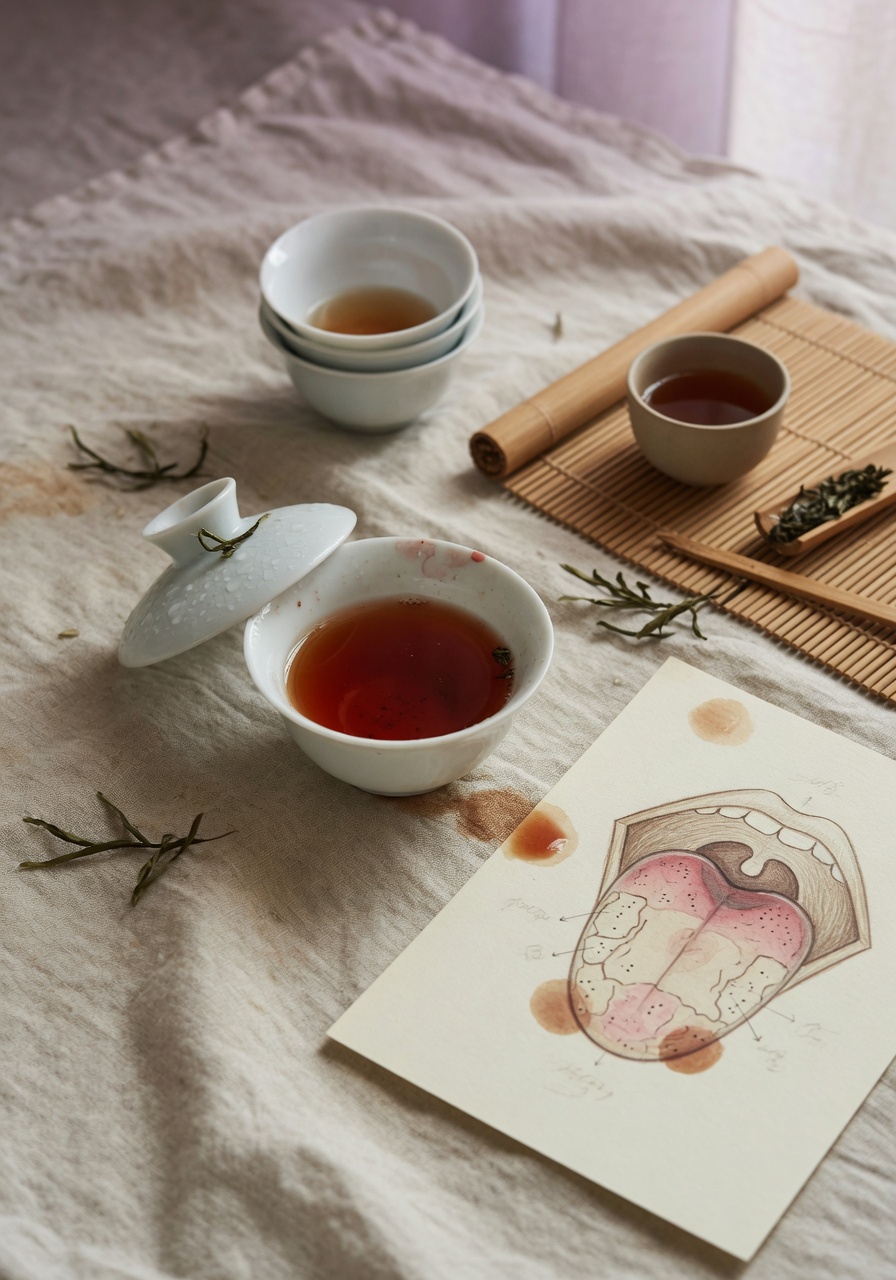
Huígān — the returning sweetness, scored
The sweetness that arrives after the tea is gone is the most discussed and least defined sensation in Chinese tasting rooms. Here is how to anchor it on a 10-axis rubric.
Astringency and mouth-feel — building a 5-point scale
Astringency is the tactile sensation that shapes a tea's architecture — not a taste, but a mouth-feel. Professional graders score it on a scale from silky absence to harsh grip. Here's how to build a calibrated 5-point scale that works across white, green, yellow, and beyond.
Bitter without return vs bitter with return — scoring practice
In tea evaluation, bitterness is not a defect — it’s a signal. Learn to distinguish the flat, lingering bitterness that mars a session from the vibrant, transforming bitterness that presages a wave of returning sweetness (*huígān*), and master the scoring criteria used by professional graders at tea.degree.
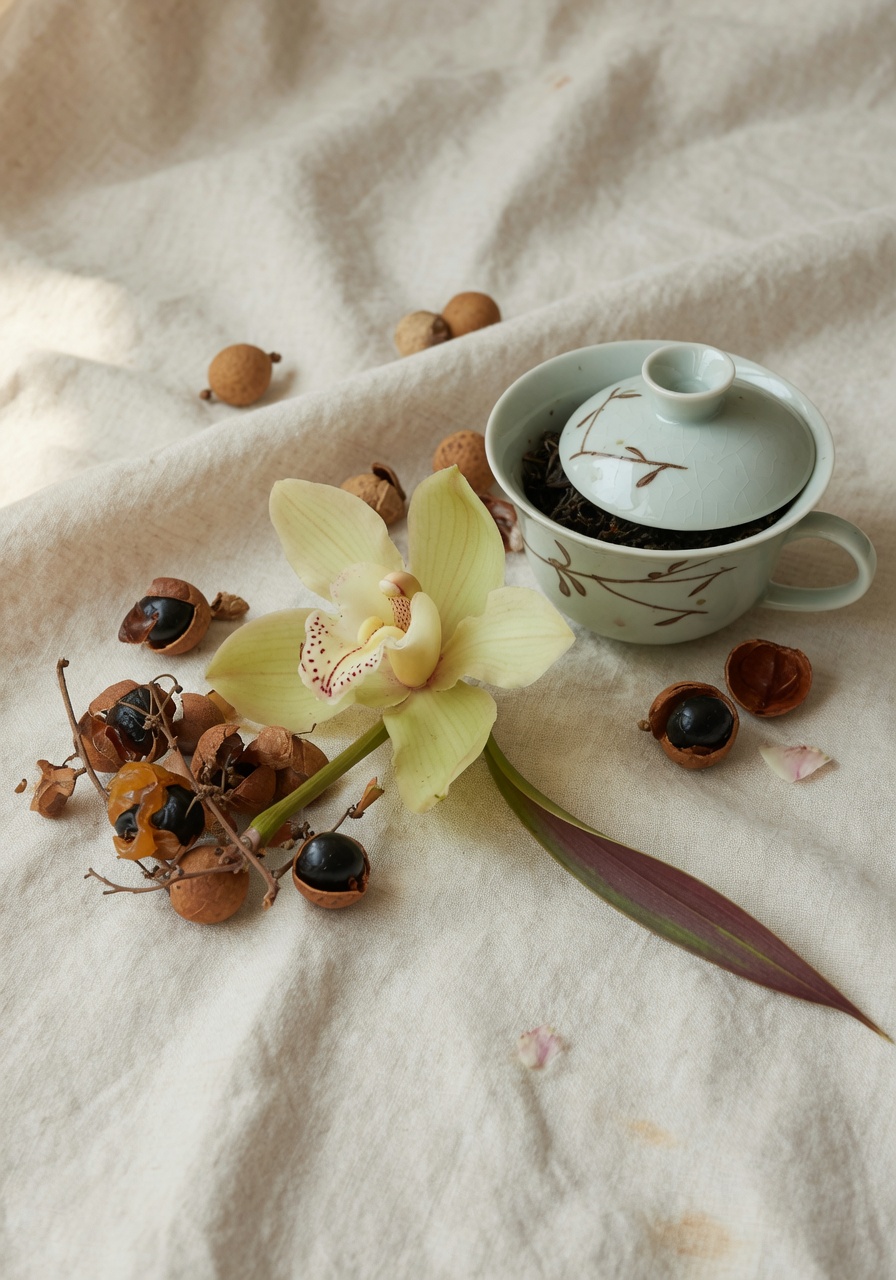
Orchid vs longan aroma — telling them apart
Two of the most over-used descriptors in Chinese tea evaluation sit only one nuance apart. This is a field guide to keeping orchid and longan distinct in your nose, your notes, and your scoring sheet.