SENSORY ANALYTICS
A tasting laboratory for Chinese tea — wheel, score, vocabulary
You have a gaiwan of a specific tea in front of you right now — a Wuyi rock oolong, a young sheng, a Fuding white — and need to turn what is in the cup into notes precise enough to still mean something to a colleague in another city, six months from now. tea.degree is the analytical instrument built for exactly that moment. Sixteen primary aroma families opening into sixty-four descriptors, a ten-axis scoring rubric aligned with GB/T 23776 cupping protocol, blind-tasting mode, and a tri-lingual vocabulary library for sommeliers, buyers, and researchers working with Chinese leaf.
Try the sensory wheel now → Buy a reference-grade lot to calibrate against — shop.teamotea.com →
TOOLS LIVE ON THE SITE ITSELF
Four instruments, no backend, nothing leaves your browser
This is not a reading encyclopedia — it is a working surface. Every tool below runs client-side and saves sessions to your own browser's storage. Nothing is uploaded, nothing requires an account.
Sensory wheel
Sixteen aroma families, sixty-four descriptors. Tap a family, tap a descriptor, build a note.
Open → ten-axis scoringTen-axis scoring
Ten sliders, a 100-point total, sessions saved to this device.
Open → blind tastingBlind tasting
Score the cup first, reveal the reference standard after.
Open → compare radarCompare radar
Overlay three to five saved sessions on one ten-axis chart.
Open → six-week calibrationSix-week calibration
Start here — a structured programme with a progress tracker.
Open →Featured this week
Recent additions to the library
Scoring rubrics
100-point vs 20-point rubric — when each is right
Bǎi fēn zhì vs èr shí fēn zhì · 百分制与二十分制
A tea buyer faces the same question every morning: is this tea an 87 or an 89? The answer can shift a price per kilogram by hundreds of yuan. But when does that fine grain matter, and when does a simpler 20-point scale serve the taster better? We unpack the two dominant scoring rubrics in Chinese tea appraisal and show where each earns its keep.
Taste & mouthfeel vocabulary
Astringency and mouth-feel — building a 5-point scale
Sè Wèi · 涩味
Astringency is the tactile sensation that shapes a tea's architecture — not a taste, but a mouth-feel. Professional graders score it on a scale from silky absence to harsh grip. Here's how to build a calibrated 5-point scale that works across white, green, yellow, and beyond.
Taste & mouthfeel vocabulary
Bitter without return vs bitter with return — scoring practice
Kǔ Wèi · 苦味
In tea evaluation, bitterness is not a defect — it’s a signal. Learn to distinguish the flat, lingering bitterness that mars a session from the vibrant, transforming bitterness that presages a wave of returning sweetness (*huígān*), and master the scoring criteria used by professional graders at tea.degree.
By topic
8 topics
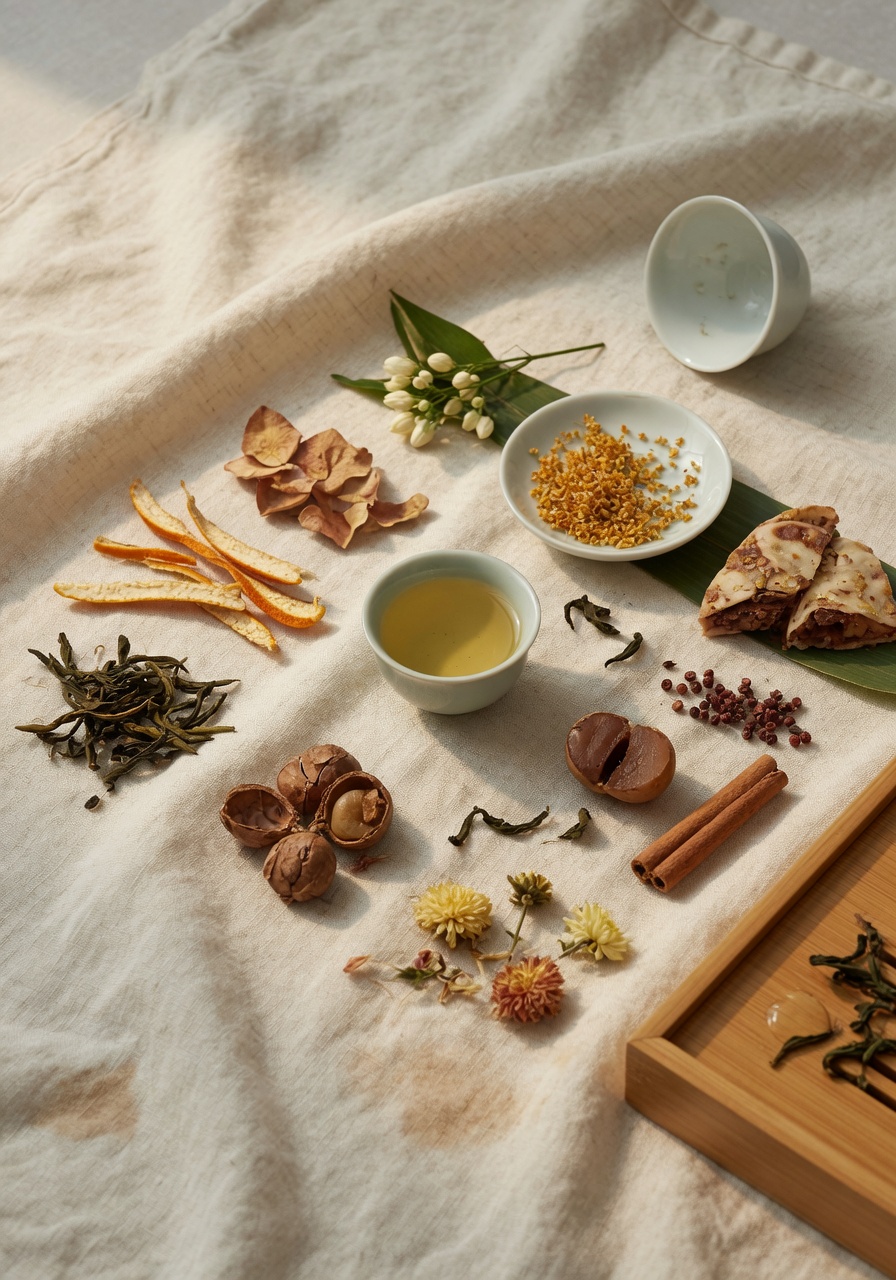
The named aromas that shape Chinese tea evaluation
Xiāng Qì · 香气
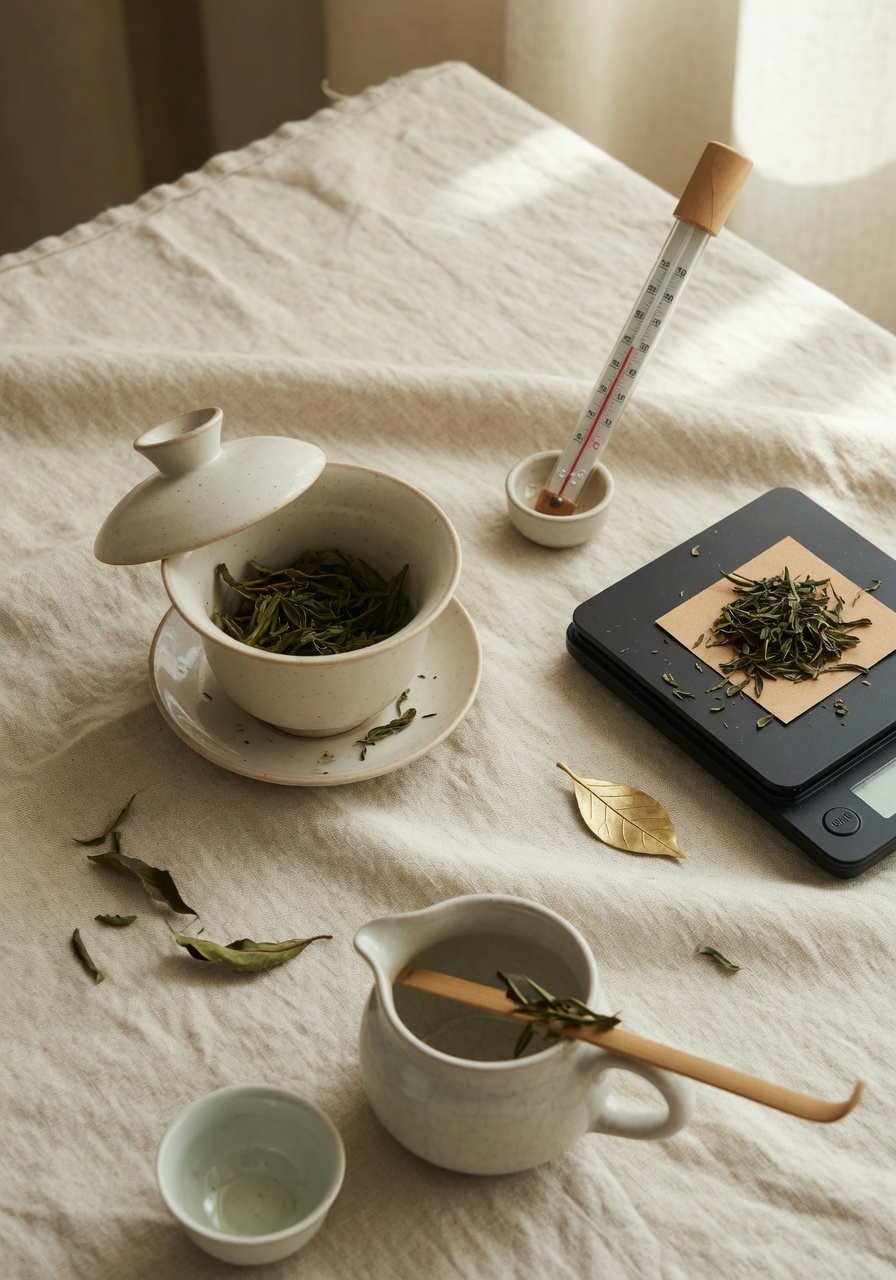
Four dials, one cup — calibrating the brew
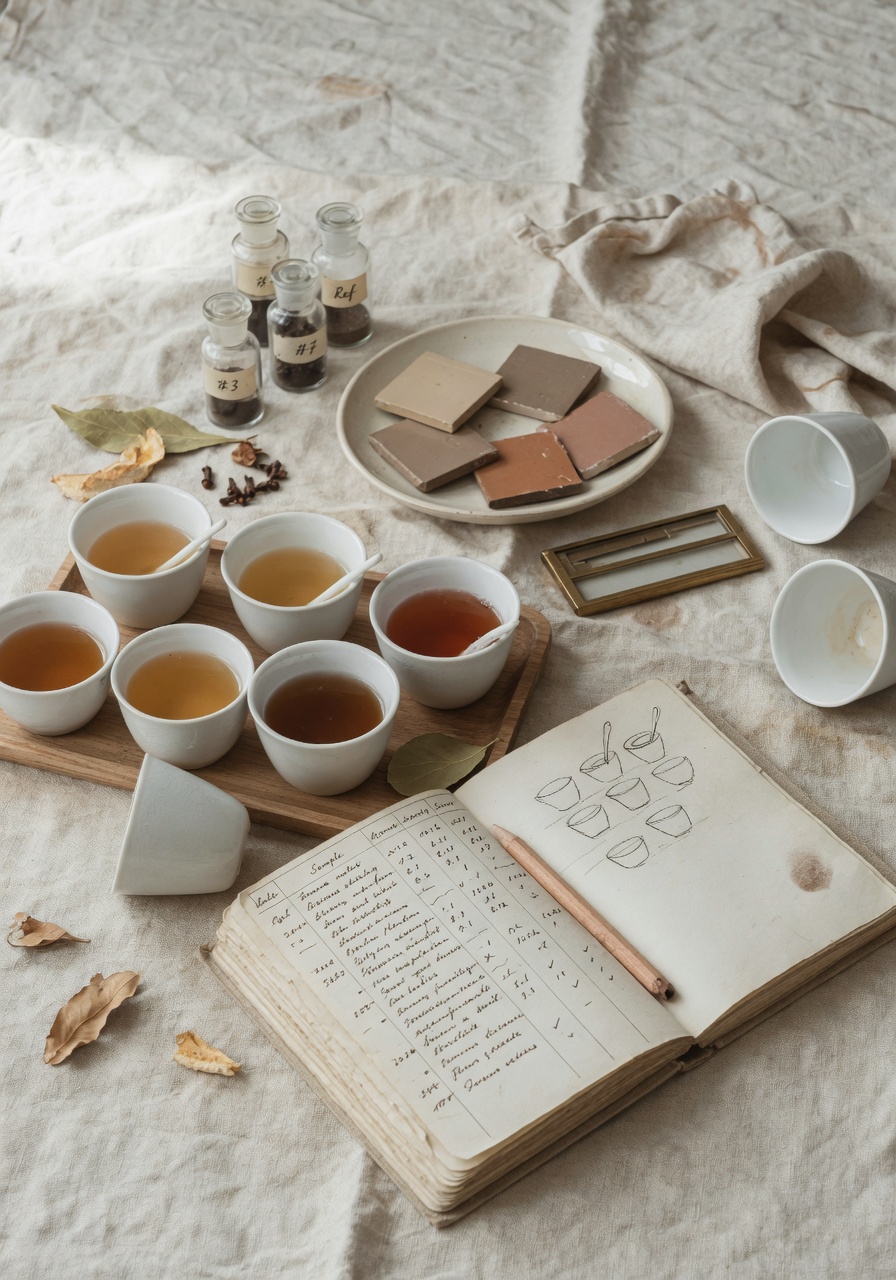
Six weeks to a standard palate
Reading the off-notes — a sommelier's defect lexicon
The blind map — anchoring regional character
fēng tǔ · 风土
How a cup is scored — the mathematics of tea evaluation
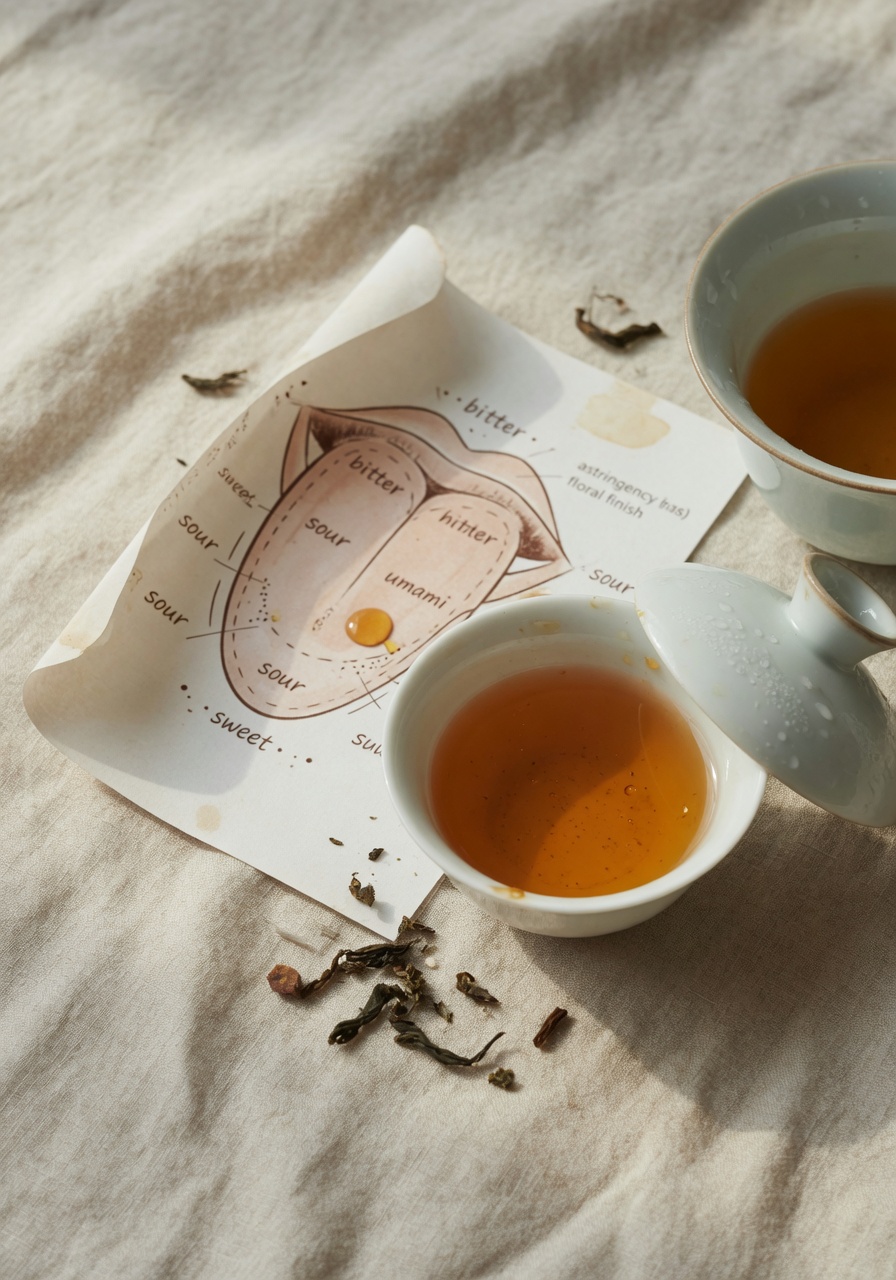
The vocabulary of mouthfeel, anchored to the cup
Kǒu Gǎn · 口感
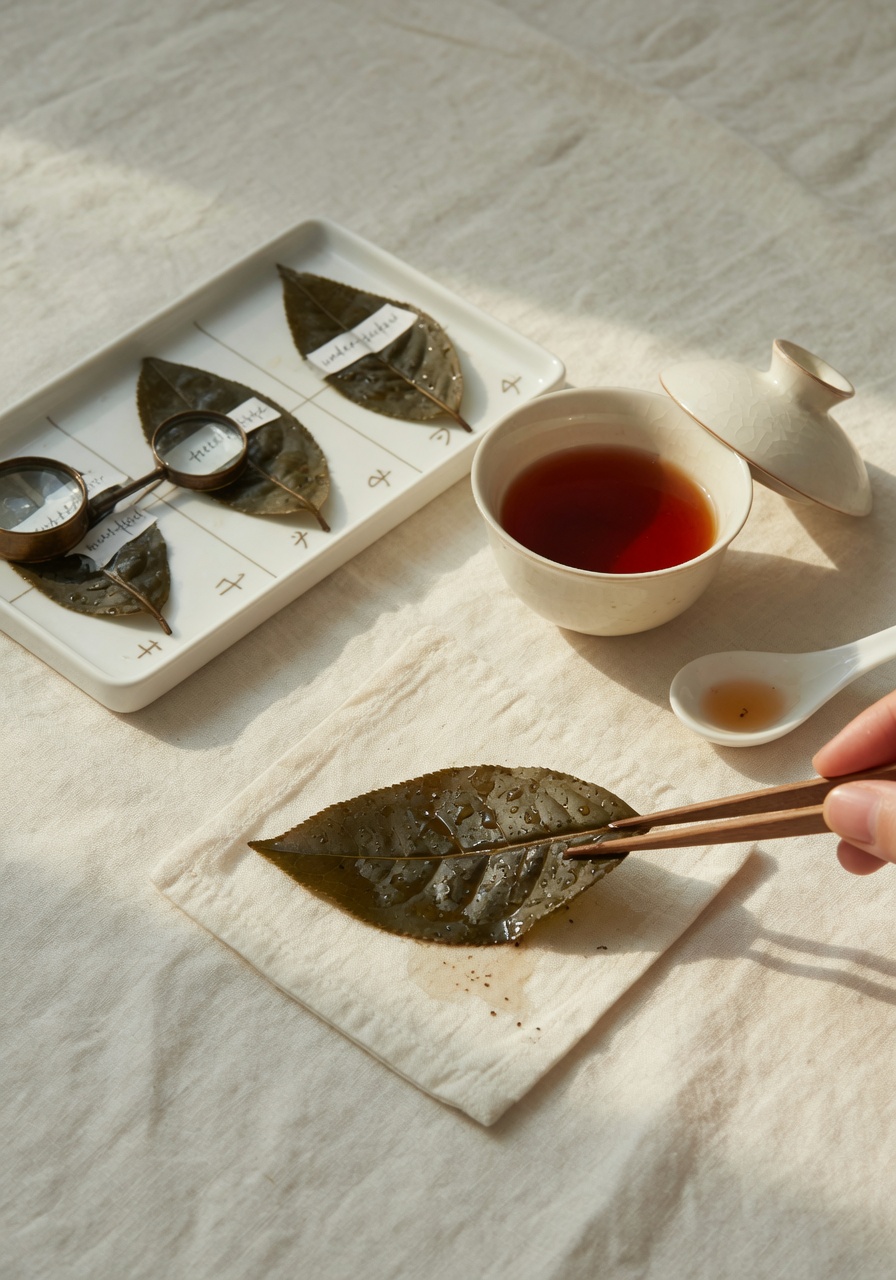
The leaf after the liquor — how to read the spent leaf
Yè Dǐ · 叶底
Newer reading
More from the catalogue
- — 01 Body and mouth-coating — calibrating the heavyweight teas
- — 02 Flat tea — what a flat pour tells you about the lot
- — 03 Floral aroma cultivars in Phoenix dancong — by named cultivar
- — 04 Fuding vs Zhenghe white tea — blind recognition
- — 05 Honey aroma in aged tea — what causes it, how to score it
- — 06 Huígān — the returning sweetness, scored